
7 minute read
Image: SMA Creative Department
February 12, 2026
Is It Real? The Ethics of Photographs in Proposals
Photographs in proposals provide proof something exists, aiming to lower any perceived risks in the eye of the evaluator of selecting the bidder. But the use of AI to create photorealistic images mistaken as actual photographs can erode that trust. We have an ethical obligation to not deceive proposal evaluators.
By Dick Eassom, CF APMP Fellow, and Tom Paisley
Introduction
A few years ago, we published a series of books in our Program Lifecycle Body of Knowledge series. In two of these, “The Essential Guide to Proposal Development” (EGPD), and “The SMA Way: A Style Guide for Proposal Writers,” we discuss the best practice of using graphics (figures, photographs, and tables, etc.) in proposals to convey complex information and key messages. In our proposal development process, the SMA Way, our objective is to create the graphics before writing the text, and to narrate the graphics, not illustrate the text.
From EGPD, “First, it is important to understand that graphics are an excellent tool for presenting data. A one-page program overview can summarize the whole proposal and provide the reader with an instant understanding. A schematic drawing is far easier to understand than text when describing each connection of a system. A well-organized table can show relationships between a great amount of data, and a flowchart can show relationships and processes with a quick glance. Illustrations show the customer how the product or physical facility will look, and photographs can be used to show the customer you already have the facilities, the equipment, and the people to do the job.”
The emphasis on the last part of that quote is important. We always assume that photographs tell the truth. That soldier’s manpack radio really does exist, built using those printed circuit board assembly machines that really do exist in that factory that really does exist, designed and built by that integrated product team of real people.
Yes, of course, photographs have always been “touched up,” and in the extreme to the point where photographs were altered to deceive the viewer. For example, in Soviet Russia, Nikolai Yezhov, head of Stalin’s secret police, committed many atrocities on Stalin’s behalf, but eventually fell out of favor and was executed. He is known as “The Vanishing Commissar” since his likeness was retouched out of an official press photo. The Soviets were good at making people literally disappear:
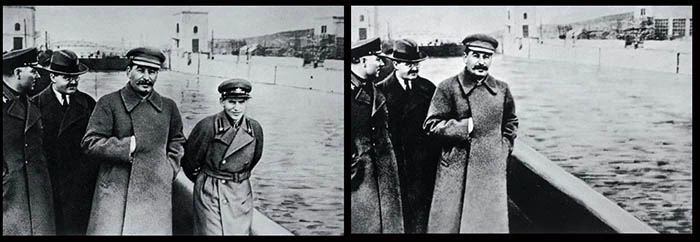
Altering Photographs for the Masses
Since the introduction of Adobe Photoshop in 1990, the verb “to photoshop” and its forms have entered the common lexicon to mean any digital retouching of a photograph, a feat that anyone with that software (or a host of similar products) can achieve with varying results—from the blatantly obvious to the sublime that only digital forensic examination would reveal. We have all touched up a photograph to enhance the brightness or contrast, or perhaps remove some small detail (not an entire Russian man!) that is not germane to the story being told.
But now there are readily available software tools available that can create photorealistic images using artificial intelligence (AI) that the casual viewer can innocently mistake for actual photographs. Tools such as Adobe Firefly, Midjourney, Stable Diffusion XL, Leonardo AI, and others, are constantly improving their ability to extrapolate photorealistic images based on photographs of real items without the well-known errors of extra fingers or nonsensical text on signs. These photorealistic images may contain artifacts that only an expert can detect to show they are not “real.”
So, does that piece of equipment really exist? Or the factory and machines that made it? Or the team that designed it? As proposal professionals, we have an ethical responsibility to clearly state the “reality” of all photographic images in our proposals to ensure the evaluators know we are telling the truth, and to cement their faith in us as the low-risk bidder.
What This Looks Like in Practice
The concerns outlined above are not theoretical. Widely available AI tools can now generate photorealistic images that, when placed into a proposal, would reasonably be interpreted by an evaluator as evidence of existing capability. The risk is not that evaluators are careless, but that they are doing exactly what they have always done: trusting photographs to show what already exists.
The following representative examples illustrate the types of imagery proposal teams and evaluators are likely to encounter. Each image is photorealistic, plausible, and consistent with common proposal usage—the kind of visual evidence we routinely accept as proof that something exists. As you review them, consider a simple question: which of these images depict existing, documented assets—and which were generated using AI.
We will revisit that question at the end of this article.
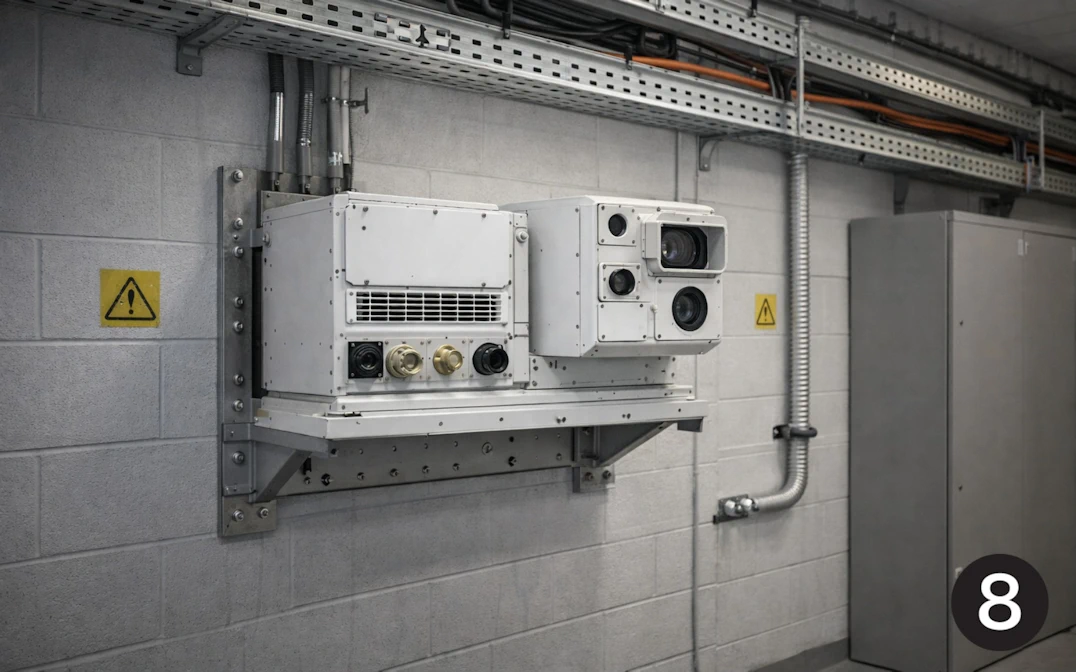
Example 1: Equipment and Hardware
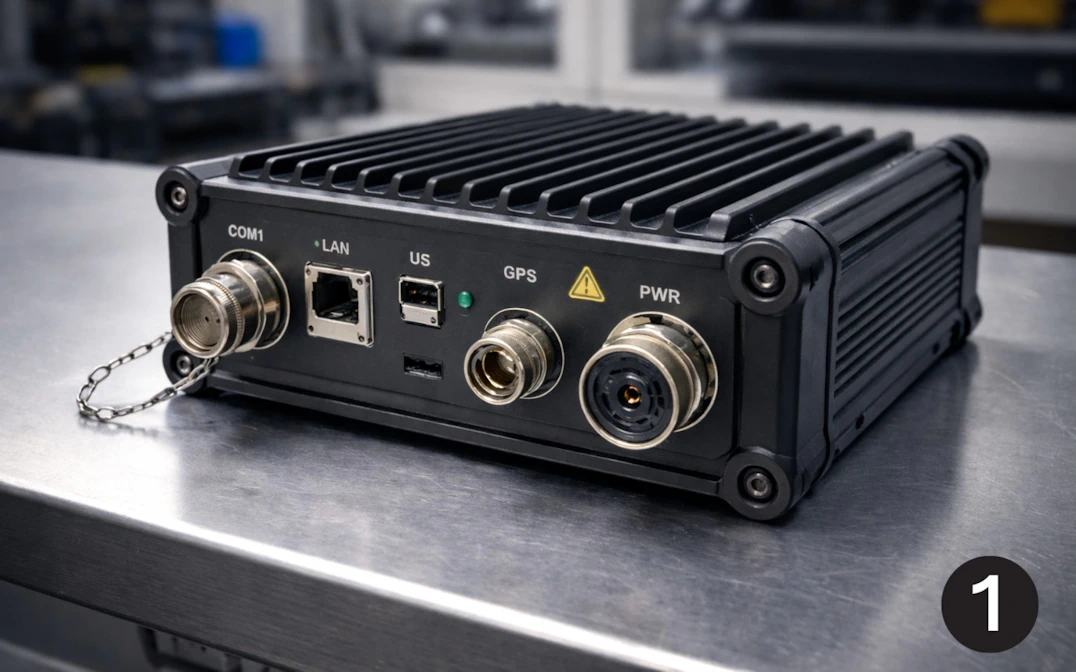

In proposals, such photographs are routinely used to reduce perceived technical risk by showing that hardware exists today, not merely as a concept. A photorealistic AI-generated image depicting such assets, if undisclosed, would create the same inference, despite no physical artifact existing.
Example 2: Manufacturing or Production Facilities
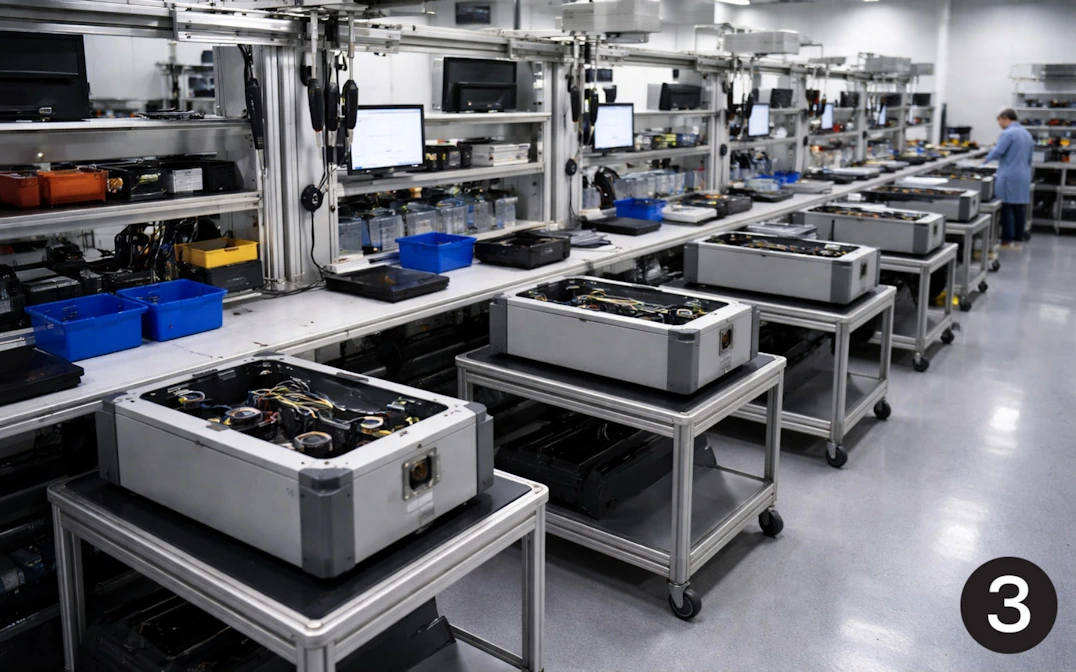
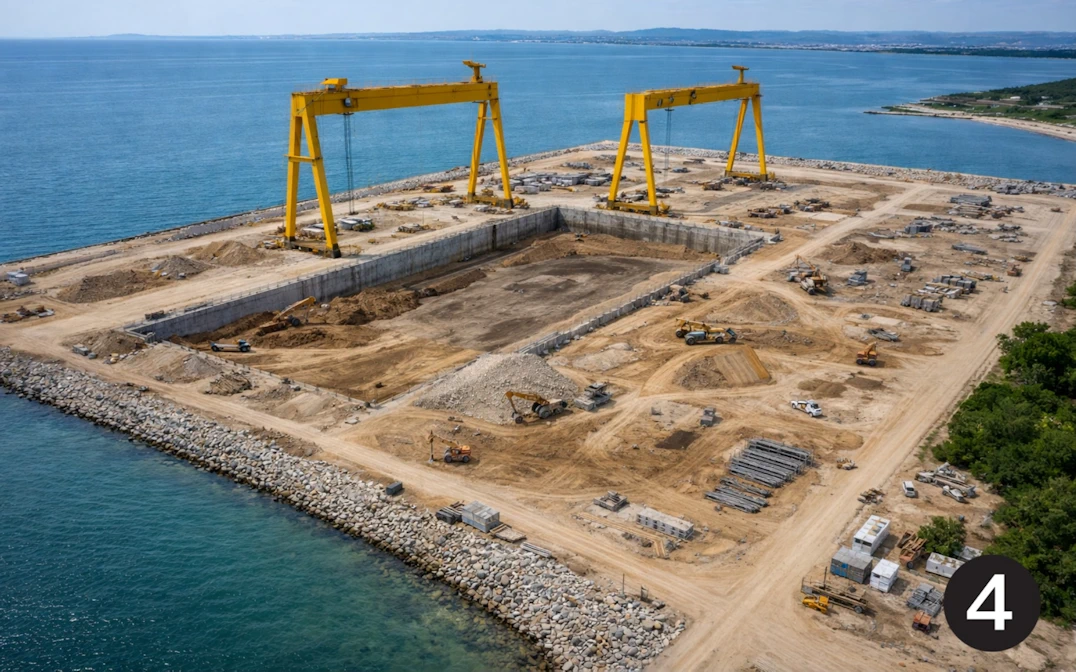
Evaluators commonly interpret photographs of assembly lines or site facilities as evidence that the offeror already possesses the infrastructure required to perform. AI-generated images in this category are particularly risky, as they align closely with evaluator expectations and do not rely on futuristic or implausible visuals.
Example 3: Teams and Personnel
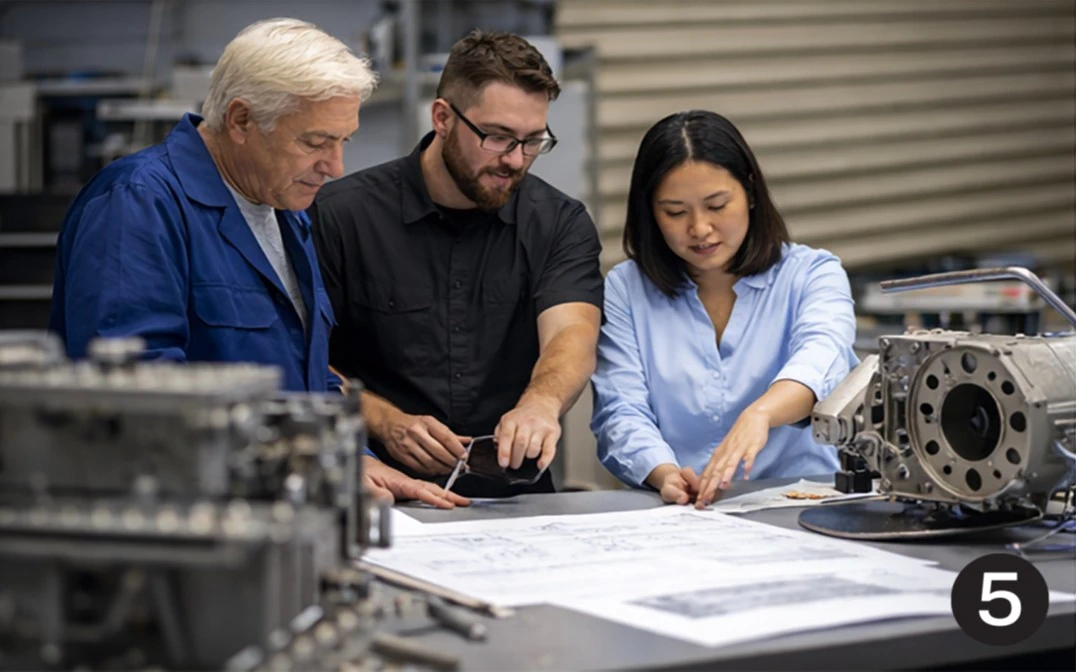
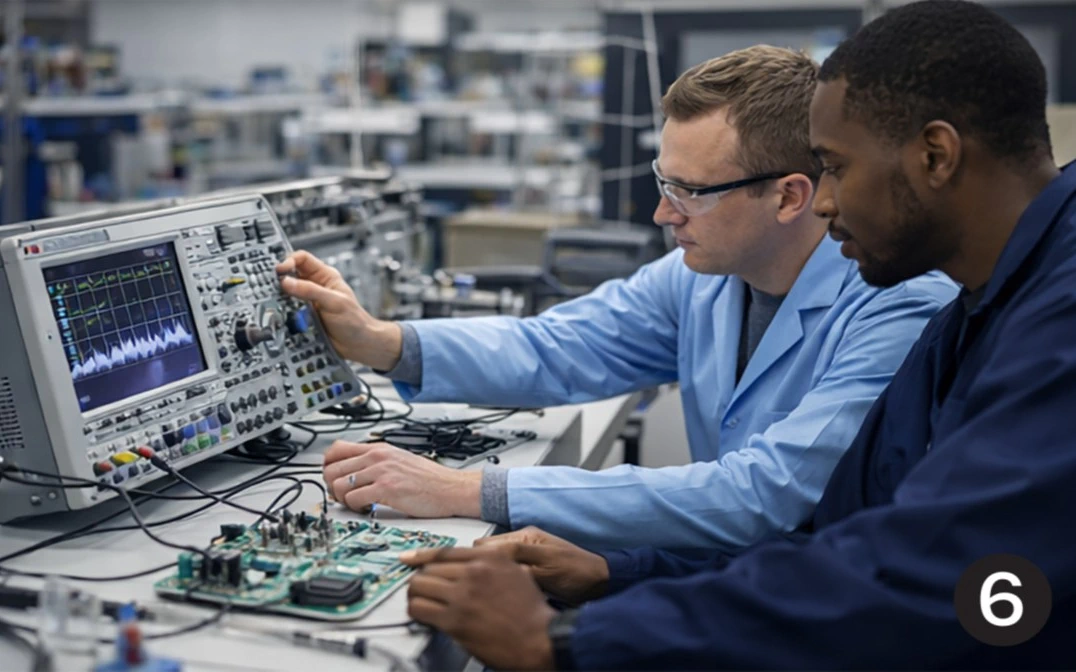
When used in management sections, team photographs reinforce credibility and trust. A photorealistic AI-generated team image could easily be mistaken for real personnel, especially when presented at small size or embedded within a complex graphic.
Example 4: Proposed Systems That Blur the Line
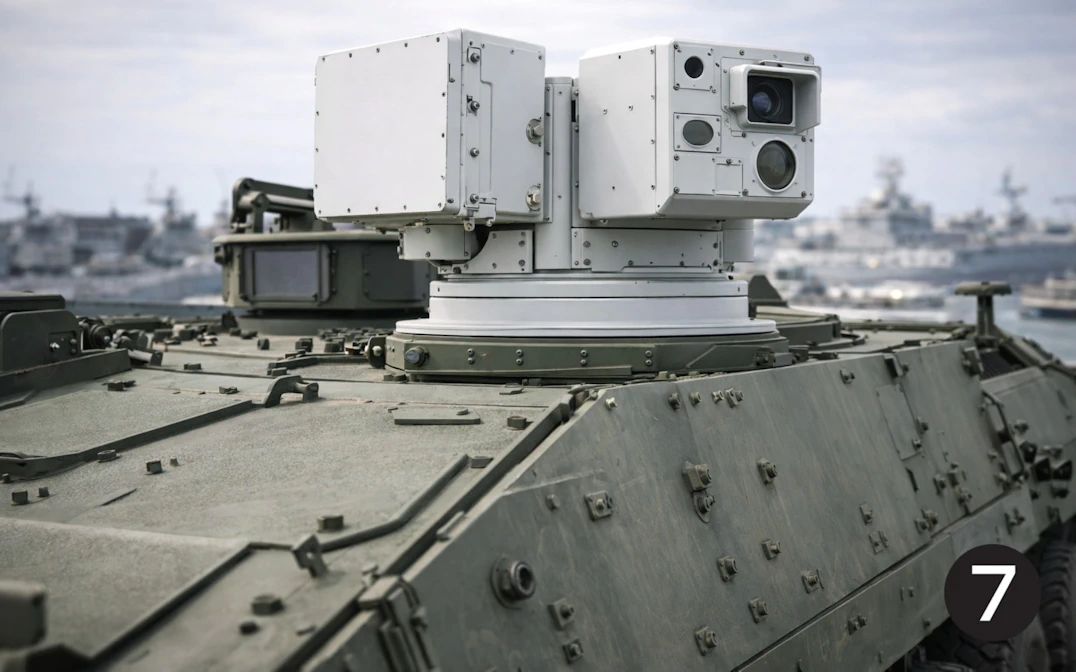
Renderings of systems that do not yet exist are commonly used to illustrate future capability. The ethical distinction lies not in the image itself, but in whether the evaluator is clearly informed that the image represents a concept or proposal, rather than an existing asset.
Recommendation
Clearly, we should still be using photographs wherever possible to show the evaluators that we have real products, facilities, and teams. Again, from EGPD, “Photographs are very powerful because they can provide evidence that the offeror is already doing the work. You are already testing the design, flying the aircraft, or demonstrating capabilities related to the offer. Photographs on an organization chart are very persuasive because the customer recognizes trusted personnel who will manage their program. Consider adding photographs to tables and charts to provide a data-rich graphic, but beware of adding excessive information and clouding the message of the graphic. Since photographs can be a long-lead item, identify requirements early.”
However, just as some requests for proposals we have seen require the offeror to state that AI was not used to create the proposal textual content, we recommend adding text to each photographic image that states the source of the image, e.g., the location and date the image was taken. This is similar to the data posted by Wikimedia Commons with each image in their collection, and provides a more positive message than simply stating, “not created by AI.” Photorealistic images created by AI as artistic renderings of, say, a proposed system to be developed as part of the subject opportunity do have their use, and can simply be marked as such.
To minimize the impact of these markings in page-limited proposals, the marking text can be added floating over a suitable corner of the photograph, compliant with any minimum text sizes stipulated in the RFP for graphics. Unfortunately, there will be an impact on word-limited proposals, if text in graphics counts towards the overall word count. Here are examples of a real photograph* and an AI-generated photorealistic image and our recommended markings for each:
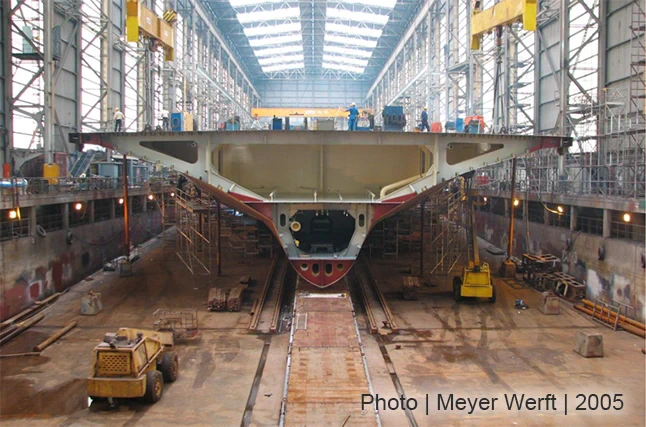

*Real photograph credit: 734 Module, by Brinki, licensed under Creative Commons Attribution-ShareAlike 2.0 via Wikimedia Commons
Real or AI? If you concluded that at least some of images 1 through 8 are real photographs taken with a camera, you were not alone, but wrong: we generated all eight using AI.
Note: Although we used AI tools for research and to generate the example images, we wrote the text of this article ourselves.
Did you know? The word “photograph” was invented in 1839 by English polymath Sir John Herschel from the Greek phos (light) and graph (drawing). He also invented the blueprint!
 |
Dick Eassom, CF APMP Fellow, is SMA’s Vice President for Corporate Support, and a certified Fellow and Founders' Award recipient of the Association of Proposal Management Professionals (APMP). He has led complex proposals worldwide across diverse sectors, supporting high-performing business development teams. |
 |
Tom Paisley serves as Creative Director at SMA. Over a 30-year career spanning both government and industry roles, he has led visual strategy and communication efforts supporting complex programs, helping translate technical and operational concepts into clear, persuasive narratives. |
Posted on February 12, 2026, by
Dick Eassom, CF APMP Fellow, SMA, Inc.